NVIDIA CEO Jensen Huang's Commencement Message: 'Your Career Starts at Dawn of AI Revolution'
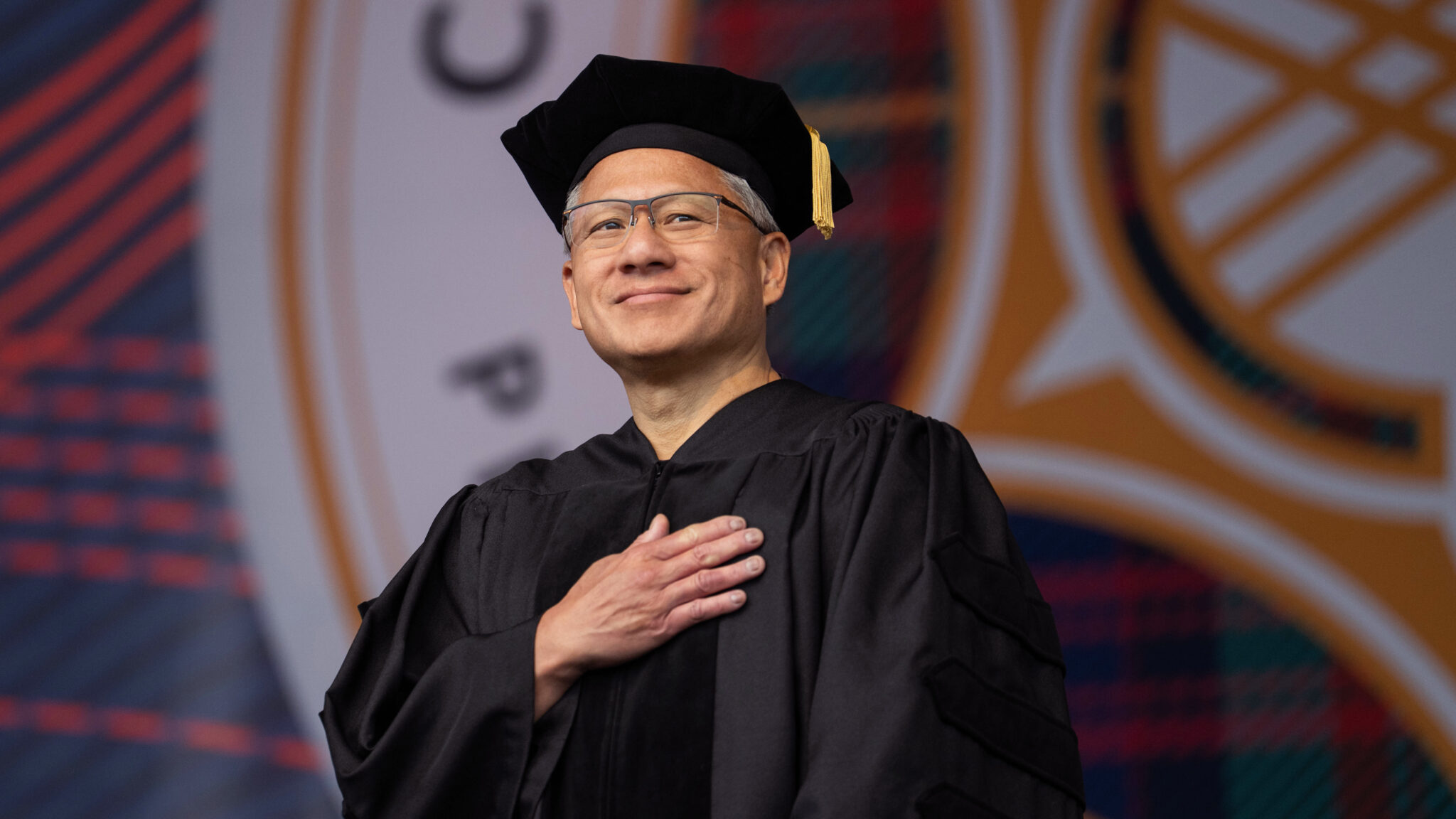
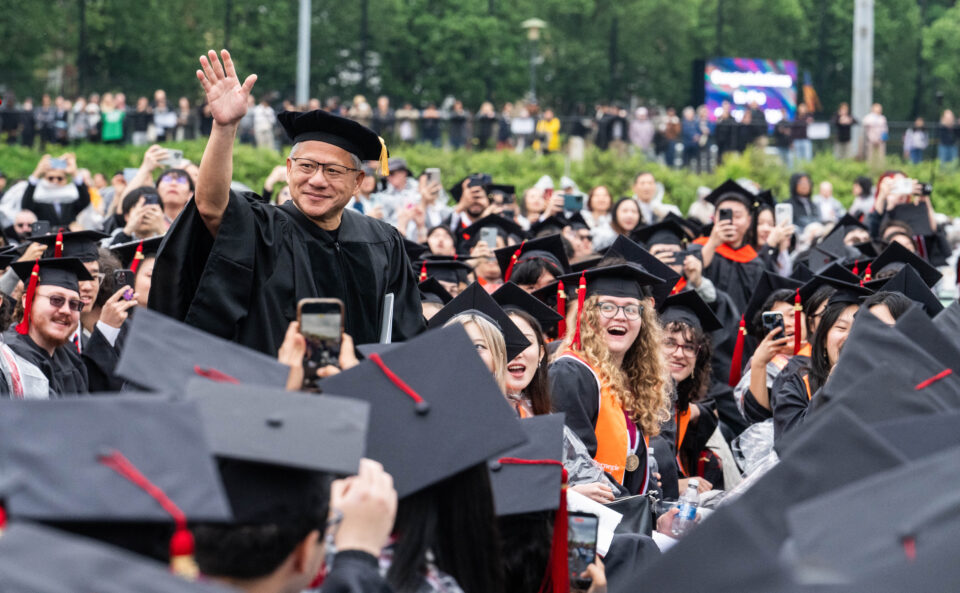
In a stirring commencement address at Carnegie Mellon University's 128th graduation ceremony, NVIDIA founder and CEO Jensen Huang delivered a message of unprecedented opportunity for the Class of 2024. Standing before thousands of graduates in Gesling Stadium, Huang framed their entry into the workforce as coinciding with a pivotal moment in technological history—the birth of the AI revolution. Below, we explore the key themes and insights from his speech through a series of questions and answers.
1. What did Jensen Huang tell graduates about the timing of their careers?
Huang emphasized that graduates are stepping into a world at a truly extraordinary moment. He declared, “A new industry is being born. A new era of science and discovery is beginning.” He noted that no previous generation has entered the world with such powerful tools and greater opportunities. Despite the rainy morning, his message was clear: every graduate stands at the same starting line, and this is their moment to shape the future. He drew a direct parallel to his own career launch at the beginning of the PC revolution, urging them to recognize the historical parallels. The timing, he argued, could not be more perfect for them to realize their dreams.
2. How did Huang compare the AI revolution to previous technology shifts like PCs and the internet?
Huang traced a lineage of computing platform shifts—from personal computers to the internet, mobile, and cloud—each building upon the last. However, he asserted that the AI revolution surpasses them all in magnitude. “What is about to happen now is bigger than anything before,” he said, because intelligence is foundational to every industry, meaning every sector will be transformed. Unlike earlier revolutions that primarily affected specific domains, AI permeates all aspects of work and life, making this shift universal. He argued that this widespread impact makes the current graduating class uniquely positioned to leverage the change, as they enter a workforce where AI tools will be essential across all fields.
3. Why does Huang believe AI is bigger than previous technological revolutions?
According to Huang, the key difference lies in the foundational nature of intelligence. Previous revolutions dealt with computation, connectivity, or mobility, but AI directly enhances human cognition itself. “Intelligence is foundational to every industry,” he said, which means AI will reshape manufacturing, healthcare, education, and beyond. He described the current moment as the largest technology infrastructure buildout in human history, which in turn creates a “once-in-a-generation opportunity to reindustrialize America.” The scale of investment and transformation required dwarfs past shifts, making AI a catalyst for economic and societal change that touches every job, from electricians and plumbers to high-tech specialists.
4. What did Huang say about closing the technology divide through AI?
Huang expressed that for the first time, the power of computing and intelligence can truly reach everyone, thereby closing the technology divide. He underscored that AI must be accessible not just to a select few, but to all people and industries. This democratization of intelligence, he argued, would allow graduates to press their advantage like no previous generation. By making tools like NVIDIA’s platforms widely available, AI can level the playing field, enabling small businesses and rural communities to compete globally. Huang sees this inclusivity as both an ethical imperative and a practical opportunity for graduates who will build and deploy these systems.
5. How does Huang describe AI's impact on American industry and the ability to rebuild?
Huang framed AI as a catalyst for “reindustrializing America and restoring the nation’s capacity to build.” He linked this to the American dream of opportunity and reinvention, noting that the AI revolution is underpinned by these values. The infrastructure buildout required for AI—data centers, energy systems, supply chains—offers jobs for electricians, plumbers, ironworkers, and many other trades. “AI is not just creating a new computing industry,” he said. “It is creating a new industrial era.” This era, he believes, will revive manufacturing and construction sectors, providing a broad economic boost that extends beyond Silicon Valley.
6. What advice did Huang give about handling the uncertainty that comes with technological revolutions?
Huang acknowledged that massive industrial and economic shifts always bring uncertainty, and the AI revolution is no exception. He stated, “Every major technological revolution in history created fear alongside opportunity.” His advice was to engage with technology openly, responsibly, and optimistically, because doing so expands human potential far more than restricting it. He encouraged graduates to embrace the unknown and to use their training to navigate the risks. By confronting fears and focusing on responsible deployment, graduates can turn uncertainty into a competitive advantage, helping to shape AI's trajectory in a positive direction.
7. How does Huang connect AI to the American dream and opportunity for graduates?
Huang directly linked the AI revolution to the core ideals of the American dream—opportunity, reinvention, and upward mobility. He argued that AI’s ability to make intelligence accessible to everyone reaffirms these values. “This is your time,” he told graduates, emphasizing that they are entering a world where they can realize their dreams in ways previous generations could not. The timing is perfect because the infrastructure is being built, and they are the ones who will design, build, and operate it. He sees AI as a democratizing force that allows graduates from all backgrounds to contribute meaningfully, not just to tech companies but to society at large.