Gaussian Splatting Revolution: Low-Cost Photo-Real Rendering Technique Breaks Game Dev Barriers
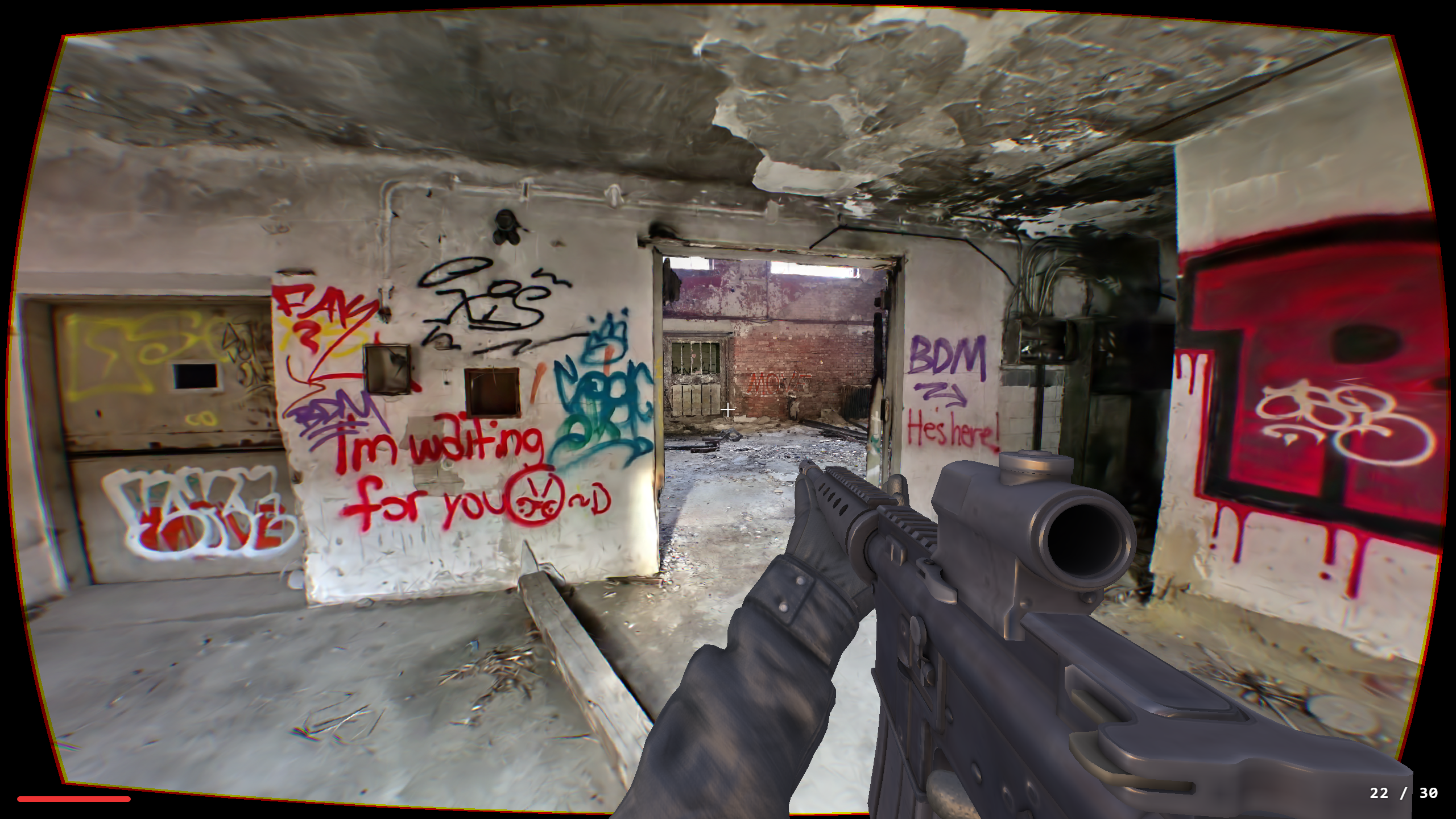
Breaking: A revolutionary rendering technique known as Gaussian Splatting is poised to transform the gaming industry by delivering photorealistic graphics at a fraction of the computational cost of traditional methods. This breakthrough was demonstrated in a browser-based first-person shooter (FPS) that stunned observers with its lifelike environments.
“For a layperson, 3D Gaussian Splatting can be compared to an extremely advanced sprite-based particle system,” explains Christoph Schindelar, a former artist at Epic Games-owned Quixel who created the demo’s environment. “In fact, some early Unreal Engine implementations rendered Gaussian Splats through Niagara, Unreal’s internal particle system.”
Background: What Is Gaussian Splatting?
Gaussian Splatting takes its name from the German mathematician Johann Carl Friedrich Gauss (pronounced GOW-see-an, not GAWE-shun). The technique replaces traditional polygon-based 3D models with countless overlapping splats—each a 3D Gaussian that projects an elliptical, semi-transparent footprint on screen.
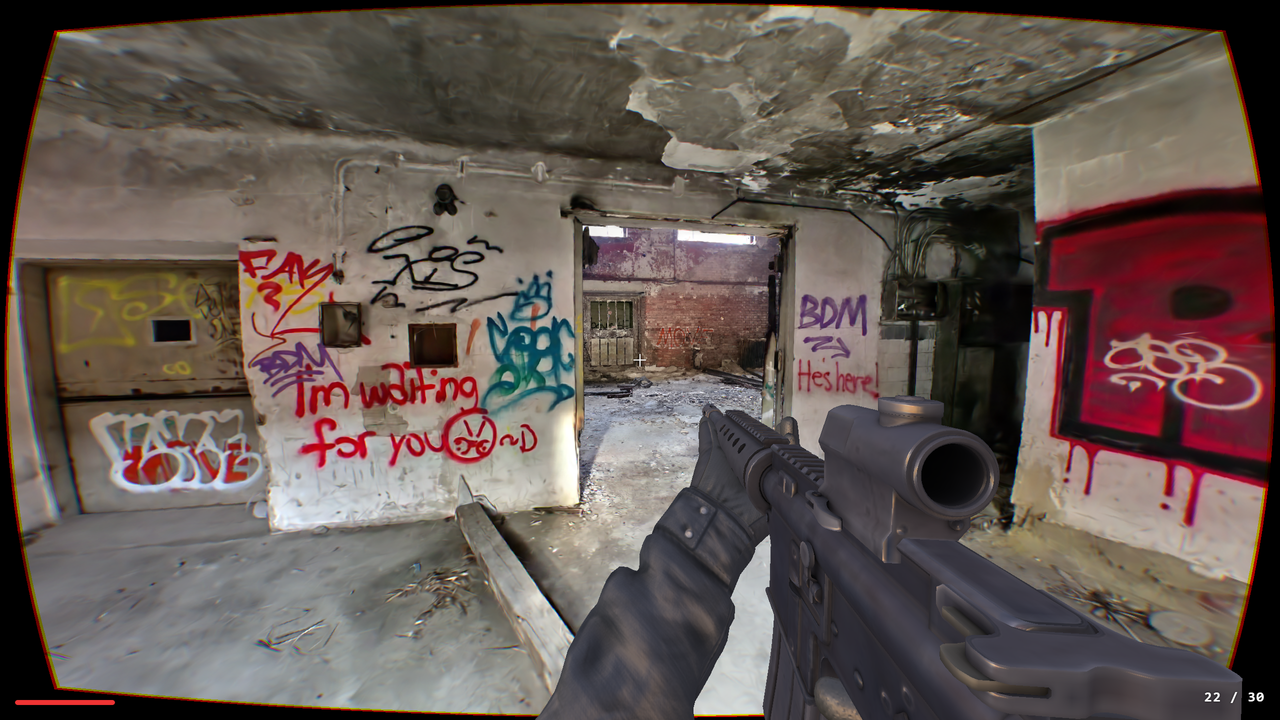
Each splat behaves like a dandelion tuft: opaque at its center and fuzzy at the edges. Multiply these splats by the thousands, and they coalesce into a high-resolution, real-time asset with an impressionistic, pointillist quality. The browser-based FPS showcases this effect, with some areas appearing slightly fuzzy up close but resolving into sharp detail from a distance.
Technical Details: How It Works
Schindelar explains: “Each splat can be stretched differently in different directions, has opacity, and can change its color depending on the view angle.” This flexibility allows Gaussian Splatting to mimic complex lighting and reflections without the heavy compute requirements of ray tracing or high-polygon modeling.
The browser demo was built by Iakov Sumygin, a Snap Inc. software engineer, who connected the game logic with Schindelar’s scanned environment. The result: a photorealistic FPS running entirely in a web browser—a feat previously thought impossible without a high-end GPU.
What This Means for Game Development
Gaussian Splatting drastically lowers the barrier to achieving photorealistic 3D graphics. Indie developers and small studios can now produce visually stunning games without the massive budgets required for traditional asset creation and optimization.
The technique’s low resource cost also opens doors for real-time rendering on mobile devices, VR headsets, and web platforms. As Schindelar notes, “We’re moving toward a future where photorealistic graphics are no longer the exclusive domain of AAA studios.”
Early adopters are already integrating Gaussian Splatting into workflows via plugins for engines like Unreal Engine and Unity. The technique is also being explored for film production, architectural visualization, and virtual tourism.
Challenges and Limitations
Despite its promise, Gaussian Splatting is not a silver bullet. The technique excels at static scenes and pre-captured environments but struggles with dynamic, animated objects. Current implementations also require specialized capture setups—often involving multiple camera arrays or photogrammetry scanning.
Schindelar cautions: “For now, it works best for backgrounds and environments. You wouldn’t use Gaussian Splats for a character model that needs to move and deform.” Ongoing research aims to address these limitations, including methods for animating splats and real-time capture.
Industry Reaction
The gaming community has reacted with excitement. Forums and social media channels are buzzing with developers sharing their own Gaussian Splatting experiments. Many see it as a potential successor to photogrammetry and a complement to traditional rendering.
“It’s a game-changer,” says one independent developer who requested anonymity. “I can now create backgrounds that look like real photographs without spending months on poly modeling.”
Looking Ahead
As the technique matures, expect to see Gaussian Splatting integrated into mainstream game engines and hardware. NVIDIA and AMD have hinted at driver-level optimizations for non-polygon rendering, and major game studios are experimenting with the method in pre-production.
For now, the browser-based FPS remains the most accessible showcase. Try it yourself to experience the future of real-time graphics—just be prepared to have your expectations splattered.